

Hey there, fellow kitchen enthusiasts! As a supplier of thin chopping boards, I often get asked this question: “Can a thin chopping board be used for heavy - duty chopping?” Well, let's dive right in and explore this topic.
First off, let's talk about what we mean by “thin chopping boards” and “heavy - duty chopping.” A thin chopping board, as the name suggests, has a relatively small thickness compared to traditional, thicker boards. On the other hand, heavy - duty chopping involves tasks like cutting through tough meats, bones, or large, hard vegetables with a significant amount of force.
Now, you might think that a thin chopping board isn't up for the heavy - duty task. After all, it seems logical that a thicker board would provide more stability and durability. But here's the thing – modern thin chopping boards are made with advanced materials and engineering that can surprise you.
Let's start with the materials. Many of our thin chopping boards are made from high - quality plastics. For example, our Cutting Board PE is crafted from polyethylene, a strong and durable plastic. This material can withstand a fair amount of pressure without cracking or breaking easily. It's also resistant to moisture, which is great because it won't warp over time like some wooden boards.
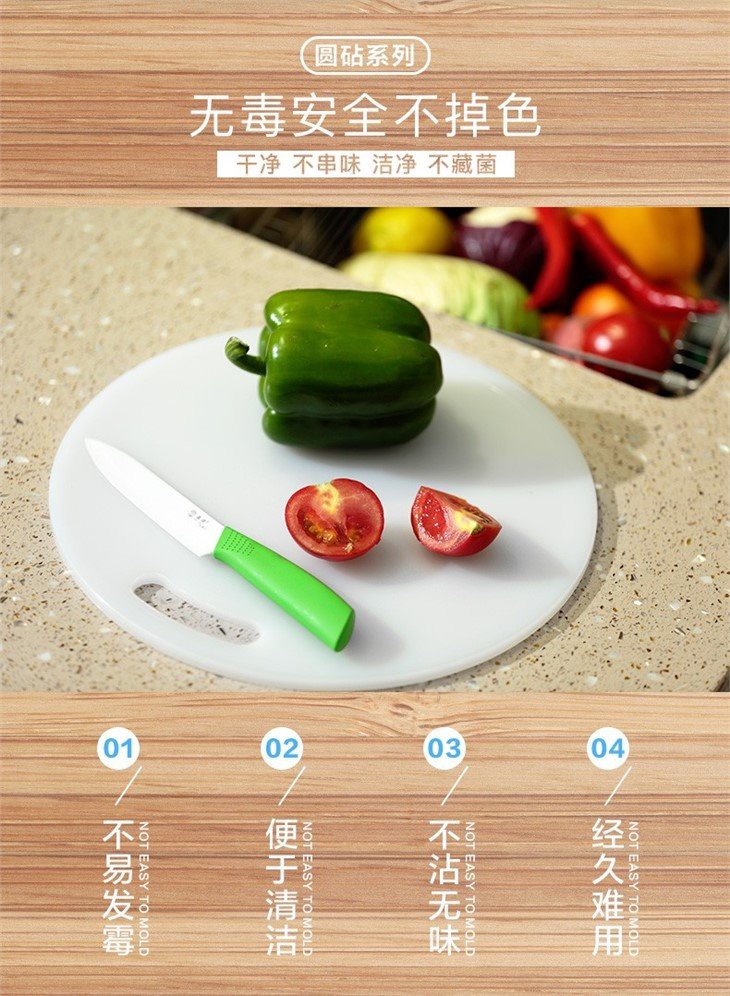
Another great option is our Plastic Cutting Board with Handle. The handle not only makes it easy to carry around the kitchen but also adds a bit of extra stability. The plastic used in these boards is designed to be tough, even when dealing with heavy - duty cutting.
When it comes to heavy - duty chopping, stability is key. You might be worried that a thin board will wobble around on the countertop. But our Plastic Chopping Block has features that address this issue. Some of them come with non - slip bottoms, which keep the board firmly in place while you're using your knife with force. This means you can chop away without having to constantly readjust the board.
But what about the surface of the thin chopping board? Will it get damaged easily during heavy - duty chopping? Well, our plastic boards have a smooth and hard surface. This surface can resist scratches to a certain extent. Of course, if you're constantly using a very sharp and heavy knife on it, you might see some minor marks over time. However, these marks don't usually affect the functionality of the board. And the best part is that plastic boards are easy to clean. You can just throw them in the dishwasher, and they'll come out looking good as new.
One advantage of using a thin chopping board for heavy - duty chopping is its portability. If you like to cook outdoors or move around the kitchen a lot, a thin board is much easier to carry than a thick, heavy one. You can take it with you to a barbecue, a picnic, or just move it from the countertop to the sink for cleaning.
Now, I'm not saying that thin chopping boards are the be - all and end - all for heavy - duty chopping. There are some situations where a thicker, more traditional board might be a better choice. For example, if you're a professional chef who does a lot of heavy - duty chopping all day long, you might prefer a thick wooden or composite board. These boards can provide a more substantial surface and may be more resistant to long - term wear and tear.
But for the average home cook who occasionally needs to do some heavy - duty chopping, a thin chopping board can be a great option. It's affordable, easy to clean, and takes up less space in the kitchen.
So, in conclusion, yes, a thin chopping board can be used for heavy - duty chopping. Our range of thin chopping boards, like the Cutting Board PE, Plastic Cutting Board with Handle, and Plastic Chopping Block, are designed to handle the pressure and provide a reliable surface for your chopping needs.

If you're interested in purchasing our thin chopping boards for your kitchen, whether for light use or heavy - duty tasks, we'd love to have a chat with you. Contact us to discuss your requirements, and we can help you find the perfect chopping board for your needs.
References
- General knowledge about plastic materials in kitchenware.
- In - house product testing and development data.